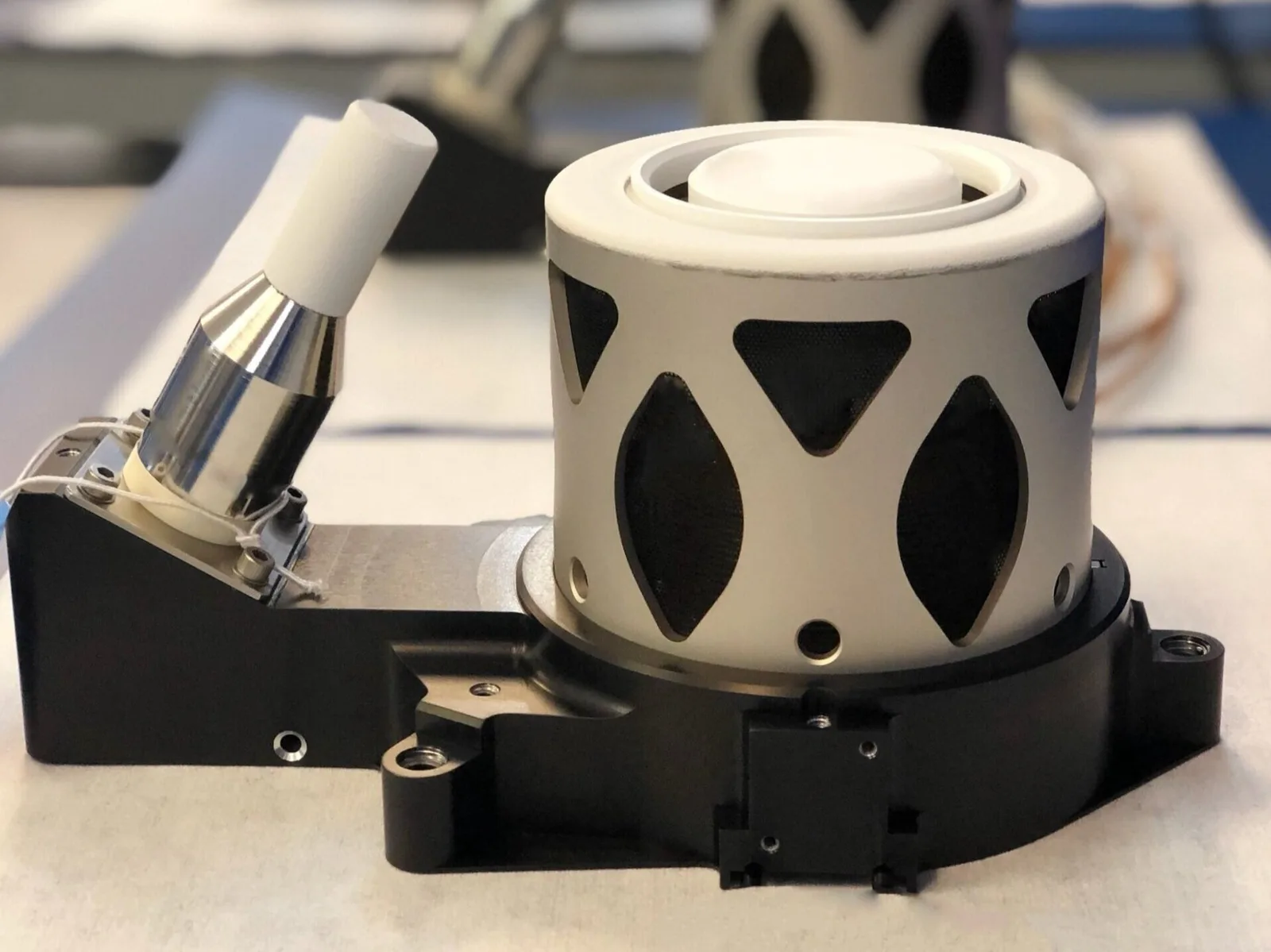
Hall thrusters (BHT series)
Family of electric thrusters, including the BHT-200 and BHT-350, that move satellites between orbits and keep them in place. Busek flew the first U.S. Hall thruster in space on TacSat-2 in 2006.
Why it matters
Electric thrusters use far less propellant than chemical ones, so satellites can carry more payload or last longer. Hall thrusters have become a standard choice for that job across commercial and government spacecraft.
How the technology works
A Hall thruster traps electrons in a magnetic field inside a ring-shaped channel. Those electrons ionize a gas such as xenon, and an electric field accelerates the ions out the back to produce thrust.
Sources
Updated Oct 22, 2026 · How we source facts · Suggest a correction