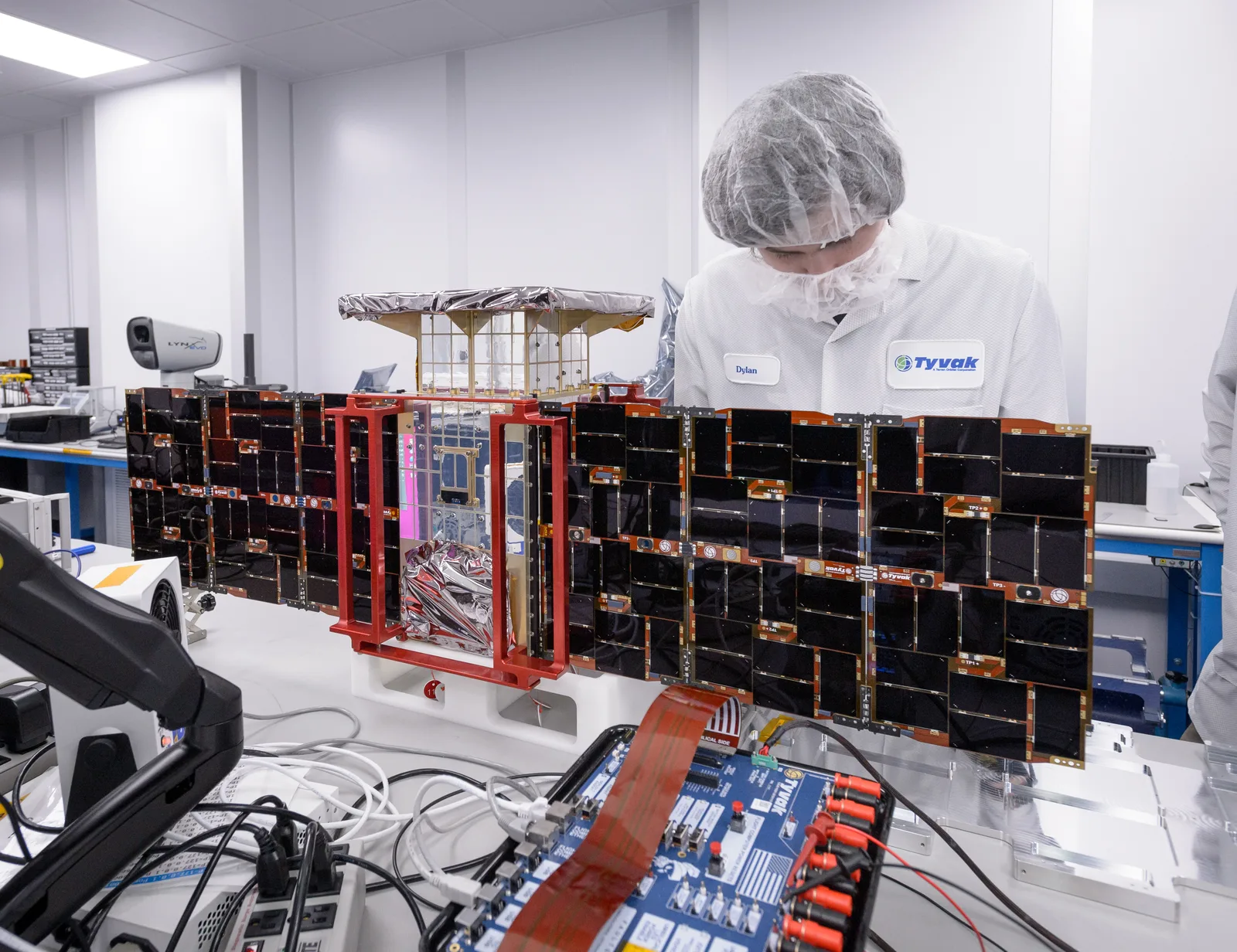
CAPSTONE
A 12-unit CubeSat that in 2022 became the first to fly the stretched lunar orbit NASA picked for Artemis, and spent nearly four years testing navigation and communications there.
Why it matters
It proved that a small, commercially run spacecraft could reach and hold this unusual orbit cheaply, and gave NASA real data for planning Artemis missions near the Moon. It also showed autonomous navigation working far from Earth.
How the technology works
CAPSTONE launched on a Rocket Lab Electron in June 2022, took a long, fuel-saving route to the Moon, and entered a near-rectilinear halo orbit in November 2022. It tested navigating by talking to NASA's Lunar Reconnaissance Orbiter, onboard optical navigation, and delay-tolerant networking.
Advanced Space owns and operates it and keeps using it as a testbed.
Sources
Updated Oct 22, 2026 · How we source facts · Suggest a correction