Space Optical Network
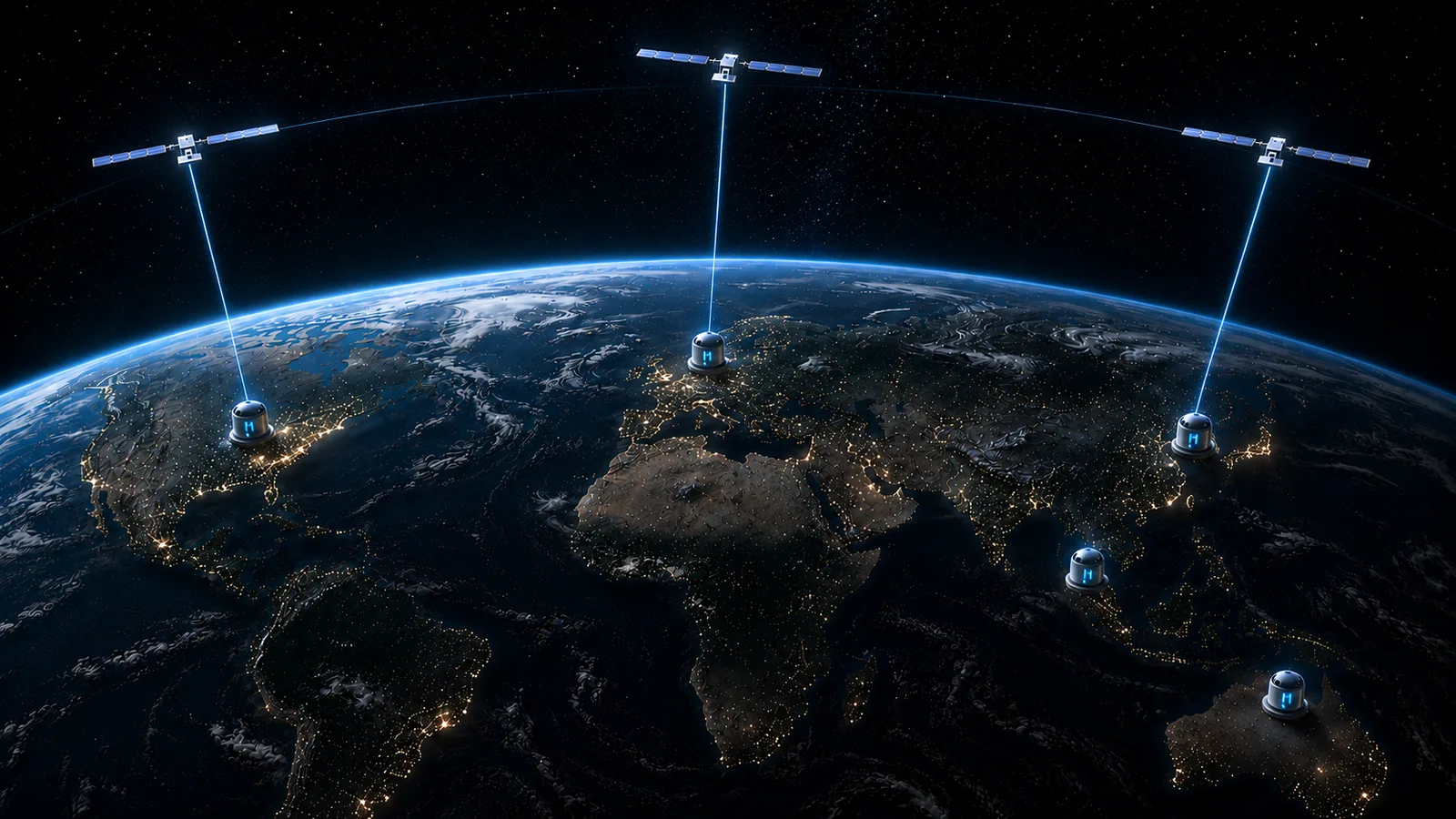
Laser terminal for satellites plus a small network of optical ground stations, sold together as one service and designed to move imagery from orbit to the ground at up to 10 Gbps.
Why it matters
Imaging satellites collect more data than radio downlinks can easily carry. Transcelestial says laser links carry far more data per pass, need no radio spectrum license and are hard to intercept or jam.
How the technology works
A laser terminal on the satellite points a narrow beam at one of Transcelestial's optical ground stations, which pass data into the customer's processing systems. In August 2026 the company said two stations were operating and five to six were targeted by the end of 2026.
Sources
Updated Oct 22, 2026 · How we source facts · Suggest a correction