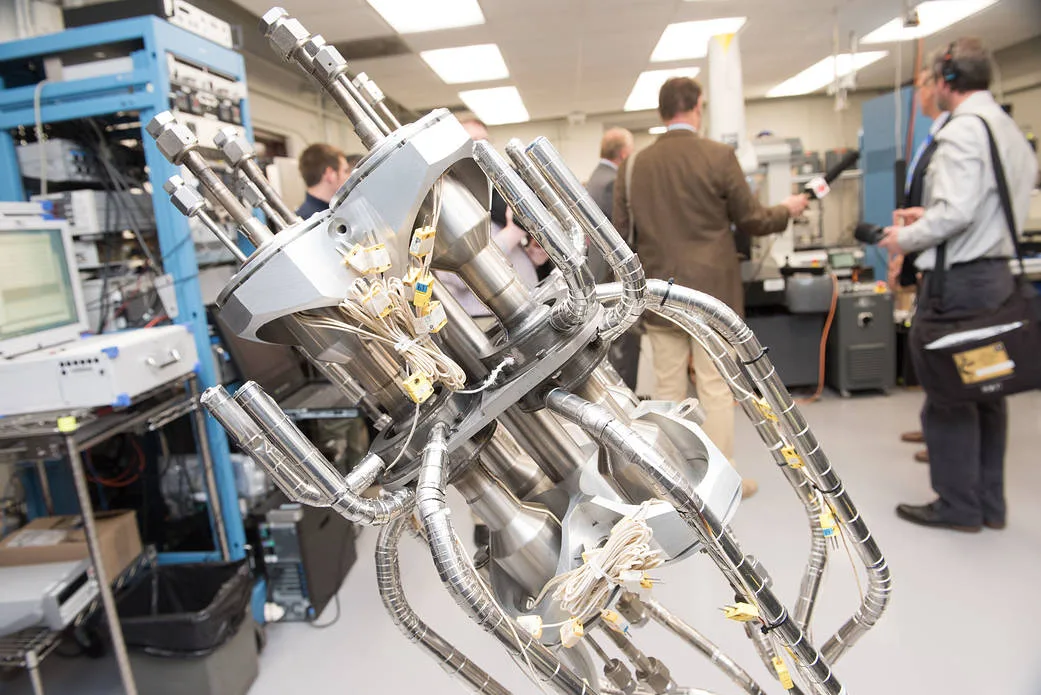
Kilopower reactor
A small fission reactor design meant to give 1 to 30 kilowatts of steady electric power in space and on the Moon and Mars. A version was ground-tested in 2018 as KRUSTY.
Why it matters
The lunar night lasts about two weeks, and solar panels go dark. A compact reactor could give steady power to bases and science on the surface of the Moon or Mars, and to spacecraft far from the Sun.
How the technology works
Kilopower stands for Kilopower Reactor Using Stirling Technology: heat from fission is turned into electricity by Stirling engines. The 2018 KRUSTY ground test used passive control.
A new DARPA-funded ground test, with Los Alamos, will add active control rods and an autonomous controller, integrated at SpaceNukes' workshop in Medina, Ohio.
Sources
Updated Oct 22, 2026 · How we source facts · Suggest a correction