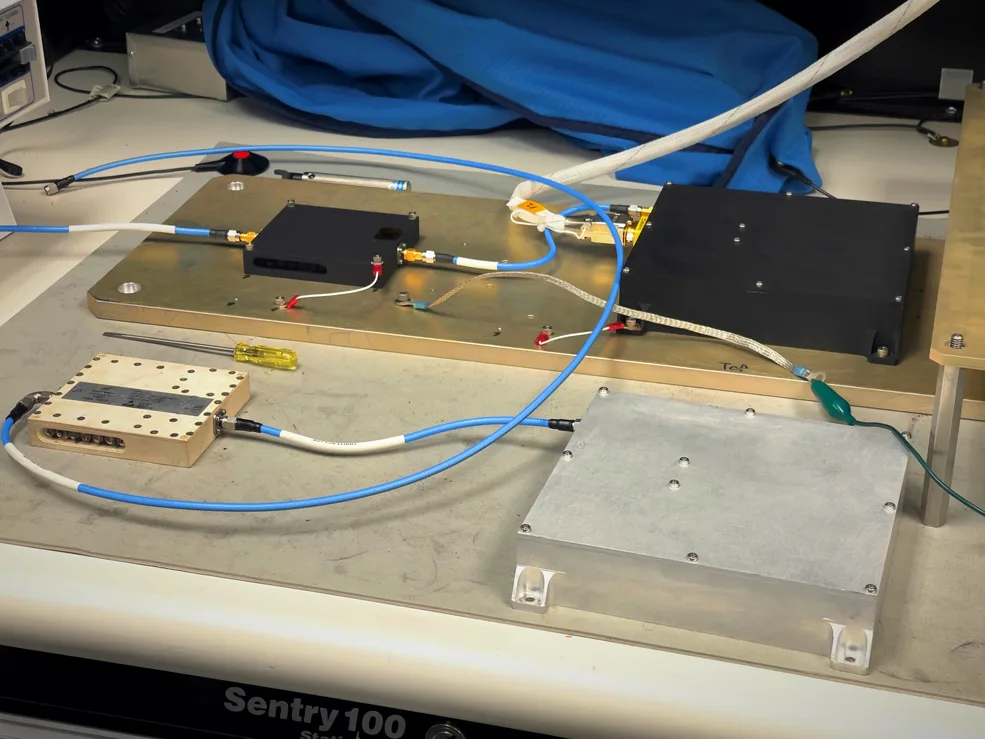
Lunar GNSS Receiver Experiment (LuGRE)
A navigation receiver that rode Firefly's Blue Ghost lander to the Moon and, on March 3, 2025, became the first to track GPS and Galileo signals and compute a position fix on the lunar surface.
Why it matters
Spacecraft near the Moon have traditionally relied on tracking from Earth to work out where they are. LuGRE showed that Earth's navigation satellite signals can be picked up and used about 225,000 miles away, so future lunar missions could navigate more on their own.
How the technology works
GPS and Galileo satellites broadcast toward Earth. LuGRE is a receiver built to acquire and track those signals at lunar distance and compute a navigation fix.
It was a joint project of NASA Goddard, the Italian Space Agency, Qascom and Politecnico di Torino, delivered by Firefly's Blue Ghost lander under NASA's CLPS program, which landed on March 2, 2025.
Sources
Updated Oct 22, 2026 · How we source facts · Suggest a correction