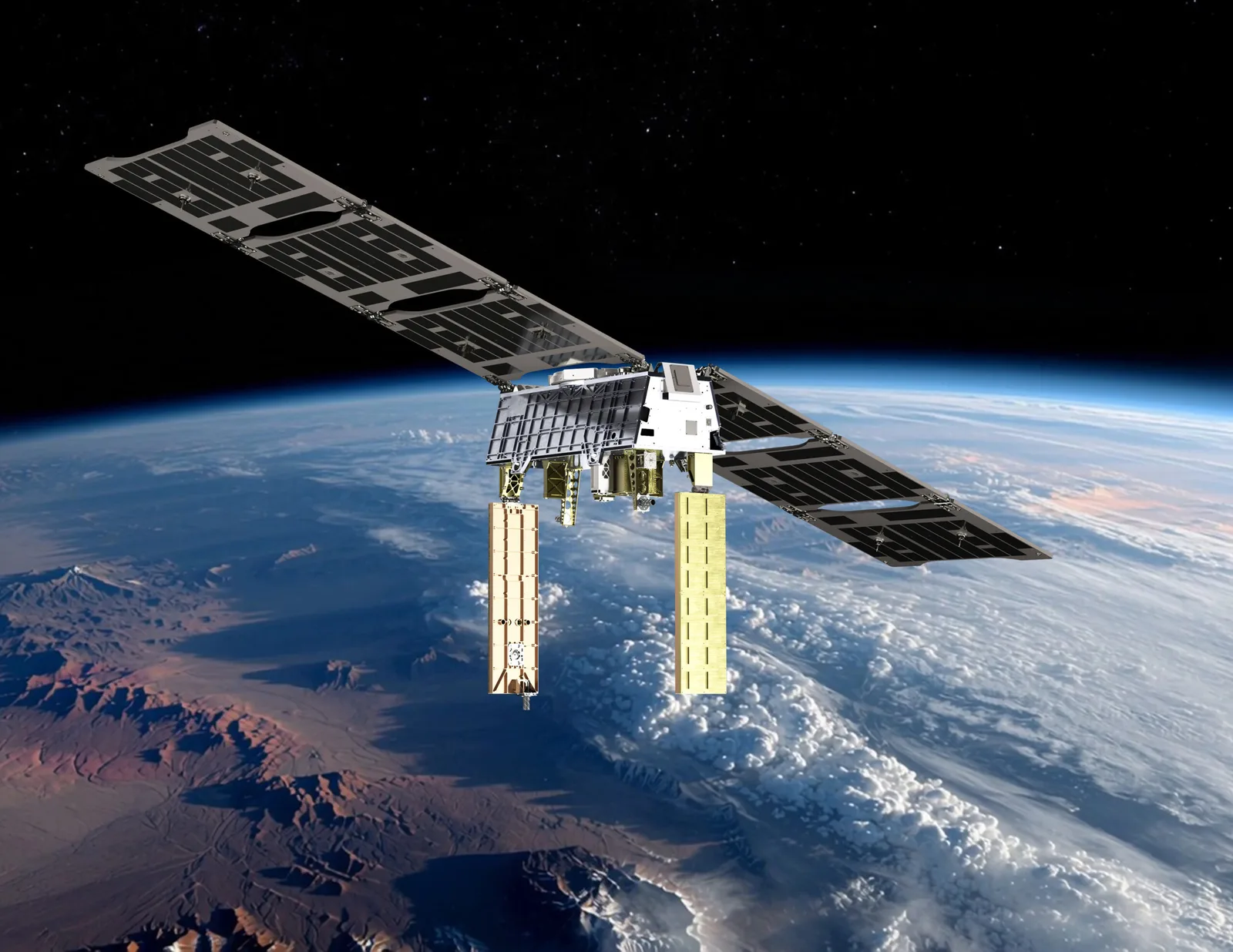
GNOMES satellites
PlanetiQ's small satellites that track navigation signals as they pass through the atmosphere, turning the bending of those signals into weather and space-weather data.
Why it matters
Radio occultation data is a high-impact input to weather models. Governments now buy it commercially instead of building every satellite themselves, and PlanetiQ says it is the largest commercial provider.
How the technology works
As a GNSS satellite sets behind Earth's edge, its signal bends through layers of air. Measuring that bending gives profiles of temperature, pressure and humidity, plus electron counts in the ionosphere.
GNOMES-5 launched in August 2024 and GNOMES-10 in October 2026.
Sources
Updated Oct 22, 2026 · How we source facts · Suggest a correction