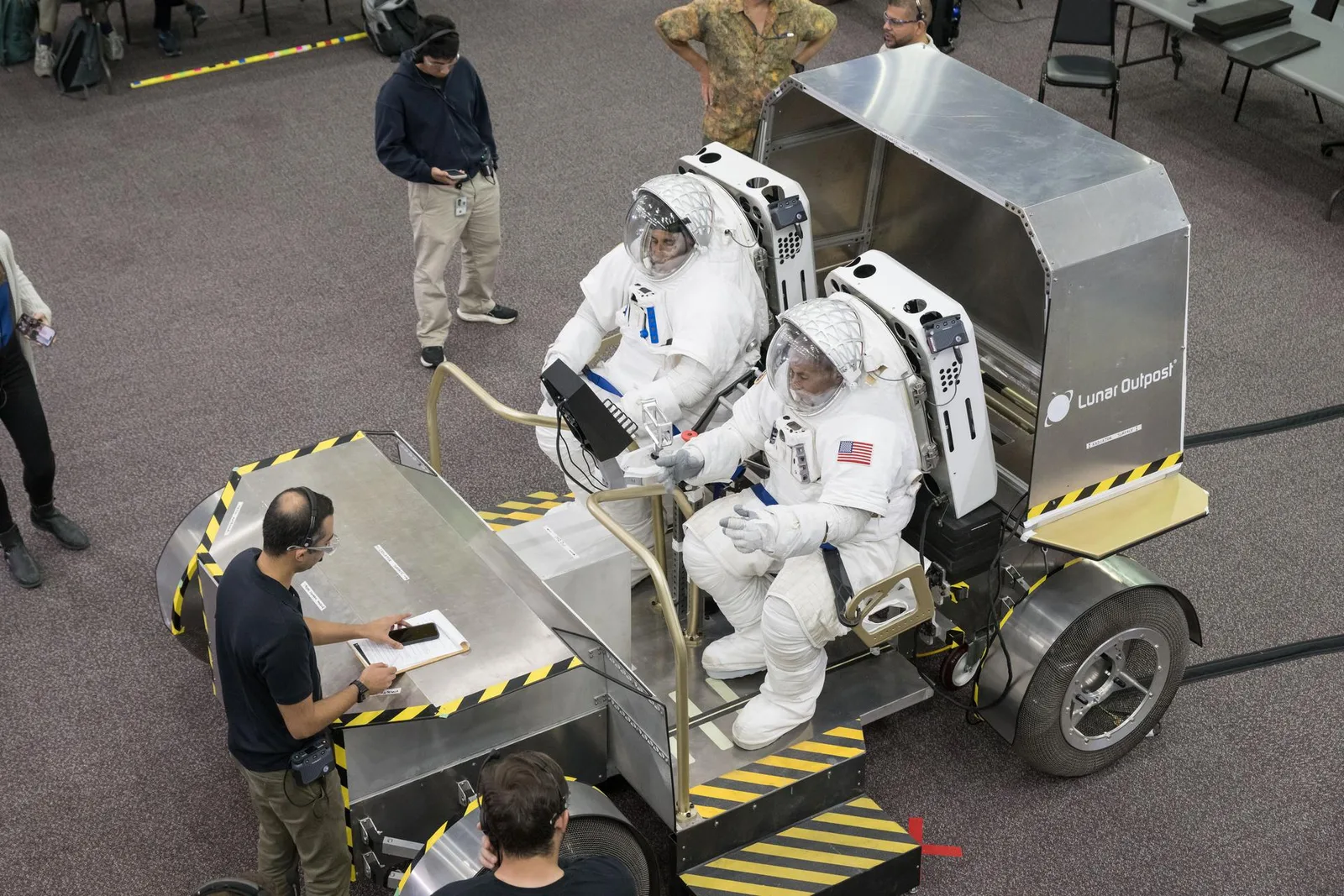
Pegasus lunar terrain vehicle
An electric Moon rover that astronauts can drive or that can drive itself. NASA selected it in May 2026 for Artemis, with a target of reaching the south pole in 2028.
Why it matters
Walking limits how far astronauts can get from their lander. A rover that can cover about 200 km lets crews reach more sites, and it can keep working as a robot between crewed visits.
How the technology works
Pegasus can be driven by two astronauts sitting side by side, operated remotely, or run on its own. It builds on Lunar Outpost's MAPP rover missions and its Eagle rover prototypes, and was developed with General Motors, Goodyear and Leidos.
Payload reports it weighs about a metric ton and travels about 10 km per hour. NASA plans to have Blue Origin's lander carry it to the surface.
Sources
Updated Oct 22, 2026 · How we source facts · Suggest a correction