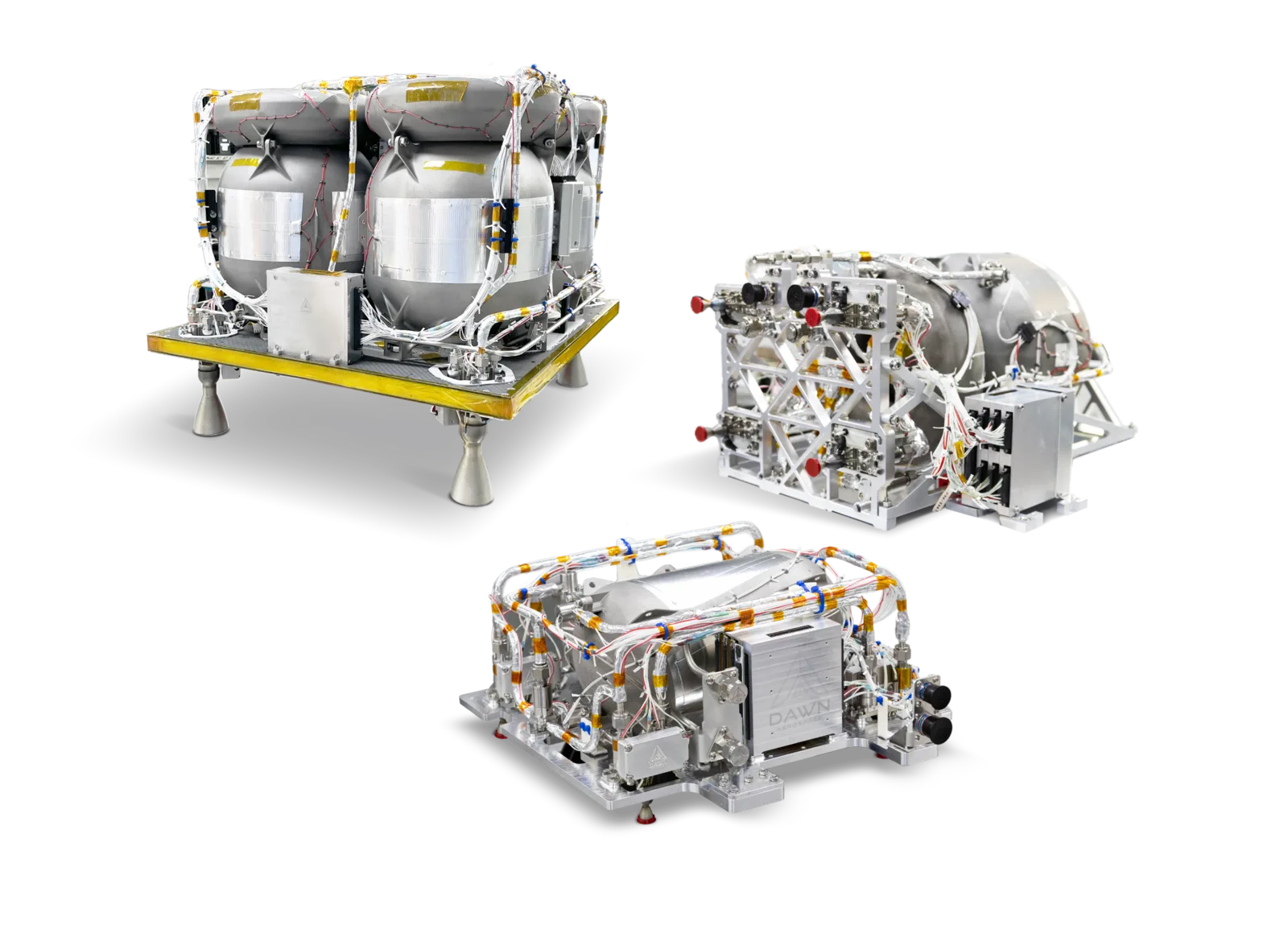
SatDrive and CubeDrive thrusters
Satellite propulsion that runs on nitrous-oxide-based propellant instead of toxic hydrazine, in sizes from a 0.8U CubeSat unit upward. Dawn says more than 200 thrusters fly on over 50 satellites.
Why it matters
Non-toxic propellants are cheaper and safer to load, and a refuelable design means a satellite's life need not end when its tank runs dry.
How the technology works
The system uses a nitrous-oxide-based propellant that is far less hazardous to handle than hydrazine. Dawn sells complete propulsion modules and a refueling port, and plans an in-orbit refueling network it calls Loop from 2028.
Sources
Updated Oct 22, 2026 · How we source facts · Suggest a correction